
Tools

Metal Weight Calculator: Online for Plate, Bar, Pipe & Sheet

Metal Weight Calculator

Enter section dimensions in mm, length in m, then select the metal. The result updates automatically in real time.

Weight per Piece

7.85 kg

Total Weight

7.85 kg

Section Volume

1.00 L

Formula in Use

Plate formula: Width × Thickness × Length × Density
Material: Carbon Steel | Density: 7850.00 kg/m³
Shape Diagram Reference
Plate / Flat Bar W T Length L Round Bar D Length L Square Bar A Length L Tube / Pipe OD ID Length L
Common Metal Density Reference Table
Metal Density (kg/m³) Density (g/cm³) Typical Use
Carbon Steel 7850 7.85 Structural sections, plate, bar
Stainless Steel 8000 8.00 Corrosion-resistant equipment
Aluminum 2700 2.70 Lightweight frames, panels
Brass 8500 8.50 Fittings, valves, machined parts
Copper 8960 8.96 Electrical busbars, conductors
Cast Iron 7200 7.20 Machine bases, heavy castings
Titanium 4500 4.50 Aerospace, chemical service
Lead 11340 11.34 Shielding, ballast

Note: actual density can vary slightly by alloy grade and manufacturing standard.

Metal Weight Calculator: Estimate Steel, Aluminum, Copper, and More

A shop ordering steel plate for a rush job can misjudge freight, rack load, and cutting cost if the weight estimate is wrong. Even a small thickness error can add dozens of kilograms. A metal weight calculator helps buyers, machinists, and engineers estimate mass before they quote, lift, store, or ship material.

What a Metal Weight Calculator Does and Why It Matters

A metal weight calculator estimates the theoretical mass of a part or raw stock from its dimensions and material density. Density is simply how much mass fits into a given volume. If you know the size of a plate, bar, rod, tube, or sheet, you can calculate its volume and multiply by density to estimate weight.

This matters because metal weight affects purchasing cost, shipping rates, machine capacity, fixture design, and safe handling. In my testing, the most common mistakes came from mixing units, such as millimeters with meters, or using a generic density for every stainless grade. Typical density values used in calculators come from manufacturer alloy datasheets and standard engineering reference tables, but the exact number can vary by grade, temper, and production method. That is why a quick estimate is useful, but not a substitute for job-critical verification.

How to Calculate Metal Weight

The core formula is straightforward:

Weight = Volume × Density

For a rectangular plate, volume is:

Volume = Length × Width × Thickness

Use consistent units. If your dimensions are in millimeters, convert them to meters before multiplying when density is given in kg/m³. For round bar, volume is πr²L. For pipe or tube, use the outer radius and subtract the inner radius area before multiplying by length.

Example: a carbon steel plate measures 2000 mm × 1000 mm × 10 mm. Convert to meters:

2.0 m × 1.0 m × 0.01 m = 0.02 m³

Using a typical carbon steel density of 7850 kg/m³:

0.02 × 7850 = 157 kg

So the theoretical weight is 157 kg. If you need pounds, multiply kilograms by 2.2046. A calculator speeds this up and reduces conversion errors, especially when you switch between sheet, round, and hollow sections.

Professional Details Most Basic Guides Skip

One important industry detail is the difference between theoretical weight and actual scale weight. Calculators return theoretical weight, but real material can differ because of dimensional tolerance, alloy variation, mill scale, coatings, and cut-length accuracy. For rolled steel products, ASTM A6/A6M defines dimensional tolerances that can affect final mass. A plate sold as 10 mm thick is not always exactly 10.00 mm across the full sheet.

A common misconception is that stainless steel is dramatically heavier than carbon steel. In reality, many common stainless grades and carbon steel grades are very close in density, usually around 7.75 to 8.00 g/cm³ versus about 7.85 g/cm³ for carbon steel. The bigger contrast is aluminum: common 6061 aluminum is about 2.70 g/cm³, so the same-size aluminum part can weigh roughly 66% less than steel. Copper, at about 8.96 g/cm³, will weigh more than either.

I have also measured nominally identical bars in stock that varied enough to matter for pallet counts and forklift planning. That is why experienced buyers use calculators for fast planning, then confirm critical orders with supplier certificates, measured dimensions, or actual scale data.

Pro Tips for Better Metal Weight Estimates

Match the density to the exact alloy. Steel, stainless, aluminum, brass, and copper all differ, and even grades within the same family are not identical. If a mill test certificate or supplier datasheet is available, use that value instead of a generic chart.

Calculate the correct geometry. For purchasing, use raw stock dimensions. For shipping a finished part, subtract holes, slots, and cutouts. This is especially important for laser-cut plate and machined blocks, where removed material can change the total weight noticeably.

Add a practical safety margin. If the result will be used for lifting, racking, or freight classification, do not rely on a perfect theoretical number. Allow for tolerance, surface coating, packaging, and moisture, then confirm with actual weighing when the load is safety-critical.

Conclusion

A metal weight calculator is a fast, reliable starting point for costing, handling, and logistics. Enter accurate dimensions, choose the right density, and remember the output is theoretical. Use the calculator above for quick estimates, then verify critical jobs with supplier data, measured parts, or a scale.

FAQs

How accurate is a metal weight calculator?

A metal weight calculator is usually accurate for theoretical estimates when dimensions and density are correct. However, actual weight can differ because of manufacturing tolerance, alloy variation, coatings, and cut length. It is best for quoting and planning, but critical lifting or billing should be confirmed by measurement.

What density should I use for steel in a calculator?

For general carbon steel, a common value is 7850 kg/m³. That works well for quick estimates, but exact density depends on the grade. If you are working with stainless, tool steel, or a certified alloy, use the supplier datasheet or mill certificate instead of a generic number.

Why is the actual metal weight different from the calculated result?

The calculated result is theoretical weight, not guaranteed scale weight. Real material may vary because of thickness tolerance, diameter tolerance, alloy chemistry, coatings, mill scale, and moisture. Finished parts can also be lighter than raw stock if holes, bevels, or machining remove material that the estimate did not subtract.

Can I calculate metal weight if my dimensions use both mm and inches?

Yes, but you must convert all dimensions into one consistent unit system before calculating. Most errors happen when users mix millimeters, inches, and density units. A safe approach is to convert everything to meters and kg/m³, or everything to inches and lb/in³, before entering values.

How do I calculate the weight of a hollow steel tube before I order it?

Calculate the tube volume by taking the outer circular area minus the inner circular area, then multiply by length and steel density. In simple terms, you are finding the metal wall volume only. A tube calculator makes this much faster and helps avoid mistakes in radius conversion.

Results are estimates only. Consult professionals. We are not liable for direct or indirect losses.

Have questions about metal materials or applications? Contact us today.
Brass Weight Calculator Online:Brass Weight by Size & Shape

Brass Weight Calculator
Real-Time Calculator

Shape

Density (g/cm³)

Length (mm)

Width (mm)

Thickness (mm)

Estimated Weight

8.50 kg

Volume

1000.00 cm³

Formula

Plate weight = L × W × T × Density / 1,000,000
All dimensions are in mm and density is in g/cm³.
Brass Stock Shape Illustration
Plate / Sheet L W T Round Bar L OD Tube / Pipe L OD ID All calculator dimensions are entered in millimeters (mm).
Brass Plate Quick Reference (Based on Density 8.50 g/cm³)
Thickness (mm) Weight per m² (kg) Weight per 1000 × 500 mm Sheet (kg)
0.50 4.25 2.13
1.00 8.50 4.25
1.50 12.75 6.38
2.00 17.00 8.50
3.00 25.50 12.75
5.00 42.50 21.25
8.00 68.00 34.00
10.00 85.00 42.50

Brass Weight Calculator: How to Estimate Brass Mass Accurately

Scrap yards, machine shops, and buyers often run into the same issue: a brass bar that “looks right” still ships overweight, costs more to machine, or exceeds a freight limit. A brass weight calculator fixes that quickly by turning size and alloy density into a practical mass estimate before you buy, cut, or quote.

What Is a Brass Weight Calculator and Why Does It Matter?

A brass weight calculator estimates the mass of brass stock from its shape, dimensions, and density. In simple terms, density means how much mass fits into a given volume. Because brass is sold as plate, rod, tube, sheet, and custom profiles, knowing weight helps with purchasing, transport, machining setup, storage planning, and scrap valuation.

In my testing, the biggest errors did not come from the formula; they came from assuming all brass has the same density or from mixing millimeters with centimeters. If you are ordering material, quoting a CNC job, or checking whether a rack can hold finished parts, a fast estimate saves time and avoids expensive surprises. It also gives you a fairer way to compare suppliers when one lists nominal dimensions and another lists net weight. For scrap transactions, it replaces rough visual guesses with a more defensible number.

How to Calculate Brass Weight

The basic rule is simple: Weight = Volume × Density. First, calculate the volume of the brass part based on its shape. Then multiply that volume by the density of the specific brass alloy. The key is unit consistency. If your density is in g/cm³, convert all dimensions into centimeters first. If your final result is in grams, divide by 1,000 to get kilograms.

Quick formulas:
Weight = Volume × Density
Plate or flat bar volume = Length × Width × Thickness
Round bar volume = π × (D² ÷ 4) × Length
Tube volume = π × ((OD² − ID²) ÷ 4) × Length

Example: assume you have a solid brass round bar with a diameter of 25 mm and a length of 1,200 mm. Convert the measurements to centimeters: 25 mm = 2.5 cm, and 1,200 mm = 120 cm. The volume is π × (2.5² ÷ 4) × 120 = about 589 cm³. If you use a typical brass density of 8.50 g/cm³, the estimated weight is 589 × 8.50 = 5,006.5 g, or about 5.01 kg. That is usually accurate enough for purchasing, quoting, and rough shipping estimates.

The Brass Density Mistake Professionals Watch For

One common misconception is that “brass is brass,” so any density value will do. That is not quite true. Brass is a family of copper-zinc alloys, and small chemistry changes can affect weight. Typical published values for common brasses often fall around 8.4 to 8.7 g/cm³, while pure copper is about 8.96 g/cm³. So, a same-size copper part will usually weigh more than a brass one.

Another detail professionals know is that dimensional tolerance can matter as much as alloy density on smaller parts. A nominal 25 mm bar may not measure exactly 25.00 mm, and tubes often vary slightly in wall thickness. That means the calculator may be mathematically correct, yet the actual piece still weighs differently. Shops also add saw-cut allowance, machining stock, and sometimes protective wrapping when estimating shipped weight, not just net metal mass.

For authoritativeness, verify the material grade on mill paperwork when available; brass rod and bar are commonly specified under standards such as ASTM B16/B16M. For measurement consistency, the NIST Guide for the Use of the SI recommends using coherent SI units. Density figures referenced here are typical values summarized from Copper Development Association alloy references and producer technical datasheets, so exact values should always be confirmed against the actual grade.

Pro Tips for Better Brass Weight Estimates

Use the actual alloy when possible. If you know whether the material is cartridge brass, free-machining brass, or another grade, use that density instead of a generic placeholder. This matters more on large orders, long bars, and export shipments where even a small percentage difference affects freight cost.

Measure real dimensions, not catalog assumptions. For tube, verify outer diameter, inner diameter, or wall thickness with calipers. For plate, include actual thickness after finishing if material has been ground or machined. A precise dimension usually improves accuracy more than chasing the fourth decimal place of density.

Add a practical buffer for planning. If you are buying stock, quoting a batch, or estimating pallet loads, round up slightly to cover tolerance, cut loss, and handling differences. A calculator is best used as a decision tool, then checked against a scale when final weights affect billing or compliance.

Conclusion

Brass weight is straightforward to estimate when you combine the correct shape formula with a realistic alloy density. Use the brass weight calculator above with verified dimensions, choose the closest material grade, and round results appropriately for purchasing, machining, shipping, or scrap planning.

FAQs

How do I calculate brass weight from dimensions?

Multiply the brass part's volume by its density. First choose the correct shape formula, such as length × width × thickness for plate or π × D² ÷ 4 × length for rod. Then use one consistent unit system and convert the result into grams, kilograms, or pounds.

What density should I use for brass?

Use the exact alloy density whenever you have a material certificate. If you do not, a typical estimate for many brass alloys is around 8.4 to 8.7 g/cm³. That range is usually good for planning, but confirmed alloy data is better for final purchasing, freight, or machining quotes.

Why is my measured brass weight different from the calculator result?

The usual reasons are alloy differences, dimension tolerances, hollow sections not matching nominal wall thickness, and unit conversion mistakes. Real stock may also include saw allowance, corner radii, or surface scale. A calculator gives a sound estimate, but the actual measured piece is the final authority.

Can I use the same calculator for brass tube and solid brass rod?

Yes, as long as the calculator supports the correct geometry. A solid rod uses the full circular area, while a tube uses the outer diameter minus the hollow inner diameter. Entering rod dimensions as tube, or the reverse, will produce a noticeably wrong result.

Is a brass weight calculator accurate enough for machining quotes and shipping estimates on mixed-alloy stock?

Yes for early quoting and planning, but only if you use realistic densities and measured dimensions. On mixed-alloy stock, small density differences can add up across many parts or long bars. For final billing, freight declarations, or compliance documents, confirm the alloy and weigh the actual material.

Results are for reference only. Consult professionals. We are not liable for direct or indirect losses.

Have questions about metal materials or applications? Contact us today.

Cabinet Handle Center-to-Center (C.C) Converter

Center-to-Center (C.C)Precision Hardware Measurement

Result in Metric:

96 mm
Best for small drawers or upper cabinets (Standard).

Common Hardware Conversion Table

Inch (Standard) Metric (mm) Common Application
3″ 76 mm Small Furniture/Boxes
3-3/4″ 96 mm Standard Kitchen Drawer
5″ 128 mm Base Cabinets/Wardrobes
6-1/4″ 160 mm Tall Pantry Doors

What does Center-to-Center (C.C.) mean in hardware?

C.C. refers to the distance between the centers of the two screw holes. This is the most critical measurement for installing cabinet pulls.

Why are 96mm and 128mm the most common sizes?

These sizes follow the System 32 European standard, which uses 32mm increments. 96mm (32×3) and 128mm (32×4) are industry standards for automated drilling.

Can I replace a 3-inch pull with a 96mm pull?

No. A 3-inch pull is exactly 76.2mm. A 96mm pull is nearly 20mm wider. You would need to drill new holes and fill the old ones.

What is the standard drill bit size for cabinet handles?

For standard M4 screws used in zinc alloy or stainless steel handles, a 3/16 inch or 5mm drill bit is typically recommended.

How do I measure C.C. on an existing handle?

Measure from the center of one screw hole to the center of the other. If the handle is still installed, measure from the center of the screw heads on the inside of the door.
Technical Disclaimer: This converter is provided for engineering reference and manufacturing study only. While we follow standard conversion factors (1 inch = 25.4mm), always verify measurements with a physical sample before mass drilling. RocheHandle is not responsible for drilling errors.

The Essential Guide to Cabinet Handle C.C. Conversion: Bridging the Gap Between Inch and Metric Standards

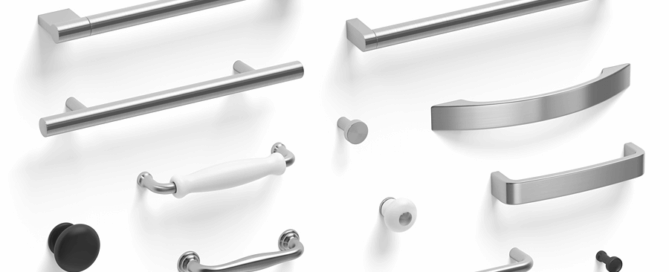
How to Measure Cabinet Pulls for Your Kitchen Like a Pro | Maxave

In the global furniture hardware industry, a persistent challenge for architects, interior designers, and kitchen manufacturers is the friction between imperial (Inch) and metric (Millimeter) measurement systems. When sourcing premium Zinc Alloy or Stainless Steel handles, understanding the Center-to-Center (C.C.) measurement is not just about math—it is about ensuring structural integrity and aesthetic precision in high-end cabinetry.

At RocheHandle, we specialize in high-precision hardware engineering to ensure that every pull aligns perfectly with global installation standards.

1. The Origin of the Metric-Imperial Conflict

The North American market traditionally relies on fractional inches (e.g., 3″, 3-3/4″, 5″), while the rest of the world and modern manufacturing hubs follow the System 32 European Standard. This metric system is built on 32mm increments, designed to optimize automated CNC drilling processes.

When a designer specifies a 3-3/4″ handle, the factory actually produces a 96mm component. While the difference (0.55mm) seems negligible, in large-scale residential projects with hundreds of cabinet doors, these micro-discrepancies can lead to “tension drilling” or misaligned pulls if not accounted for during the prototyping phase.

2. Why “96mm” is the Golden Standard

As a specialized hardware observer, we’ve noted that the 96mm C.C. (the metric equivalent of 3.75 inches) is the most utilized specification in modern kitchen design. It offers the perfect leverage for standard-sized drawers and matches the scale of most 18mm to 22mm thick cabinet panels.

However, the trend is shifting toward “Oversized Pulls.” Modern pantry doors often require 160mm, 192mm, or even 320mm C.C. handles. Calculating the weight-to-length ratio is critical here; a long Zinc Alloy handle requires a thicker base to prevent “bowing” under the physical stress of pulling a heavy door.

3. Technical Material Analysis: Zinc Alloy vs. Stainless Steel

Choosing the right C.C. length also depends on your chosen material.

  • Zinc Alloy (Die-Casting): This material allows for complex, ergonomic shapes and “solid feel” handles. Since it is die-cast, the C.C. distance is incredibly stable. RocheHandle prioritizes Zinc Alloy for 96mm and 128mm boutique handles where finish variety (like Brushed Gold or Matte Black) is a priority.

  • Stainless Steel (Hollow or Solid): Often used for “Bar Pulls,” stainless steel is frequently specified in longer C.C. lengths (above 160mm) due to its superior tensile strength. For industrial-style kitchens, a solid 224mm SS304 pull provides the necessary durability against moisture and heavy use.

4. Information Gain: The “Shrinkage” Factor in Manufacturing

What many B2B buyers overlook is the cooling shrinkage in the die-casting process. When we manufacture a 128mm C.C. Zinc Alloy handle, the mold itself must be slightly larger to account for the metal shrinking as it cools. A factory that doesn’t master this “Shrinkage Compensation” will produce handles that are 127.5mm instead of 128mm, making them impossible to install in pre-drilled holes. This is the level of technical detail we maintain at RocheHandle.

5. Installation Advice for Large Scale Projects

For developers managing multi-unit projects, we recommend a “Metric-First” approach. Even if your design team works in inches, specifying the metric C.C. (96, 128, 160) to your supplier eliminates the ambiguity of rounding fractions.

Furthermore, always consider the Overall Length vs. C.C.. A handle might have a 96mm C.C. but an overall length of 150mm due to decorative “tails.” This impacts the clearance between the handle and the edge of the cabinet door, especially in corner cabinets where handles might collide when doors are opened simultaneously.

Conclusion: Precision is the Foundation of Luxury

The difference between a “good” kitchen and a “luxury” kitchen often comes down to the sub-millimeter alignment of the hardware. By utilizing a Handle Center-to-Center (C.C.) Converter, designers can move seamlessly between regional standards without sacrificing accuracy.

For more technical insights into manufacturing standards and high-precision furniture components, explore the resource lab at RocheHandle.

Legal Disclaimer & Engineering Study:

RocheHandle is an independent B2B manufacturing research and service provider. Any reference to furniture hardware brands or specific industry standards is for technical deconstruction, material analysis, and educational study only.

The C.C. Converter tool is designed to assist designers in understanding the relationship between Imperial and Metric hardware standards. While we strive for absolute accuracy in our manufacturing data, we recommend performing a physical fit-test with samples before proceeding with mass CNC drilling or production. RocheHandle provides manufacturing logic and high-precision supply chain solutions for global brand owners.